
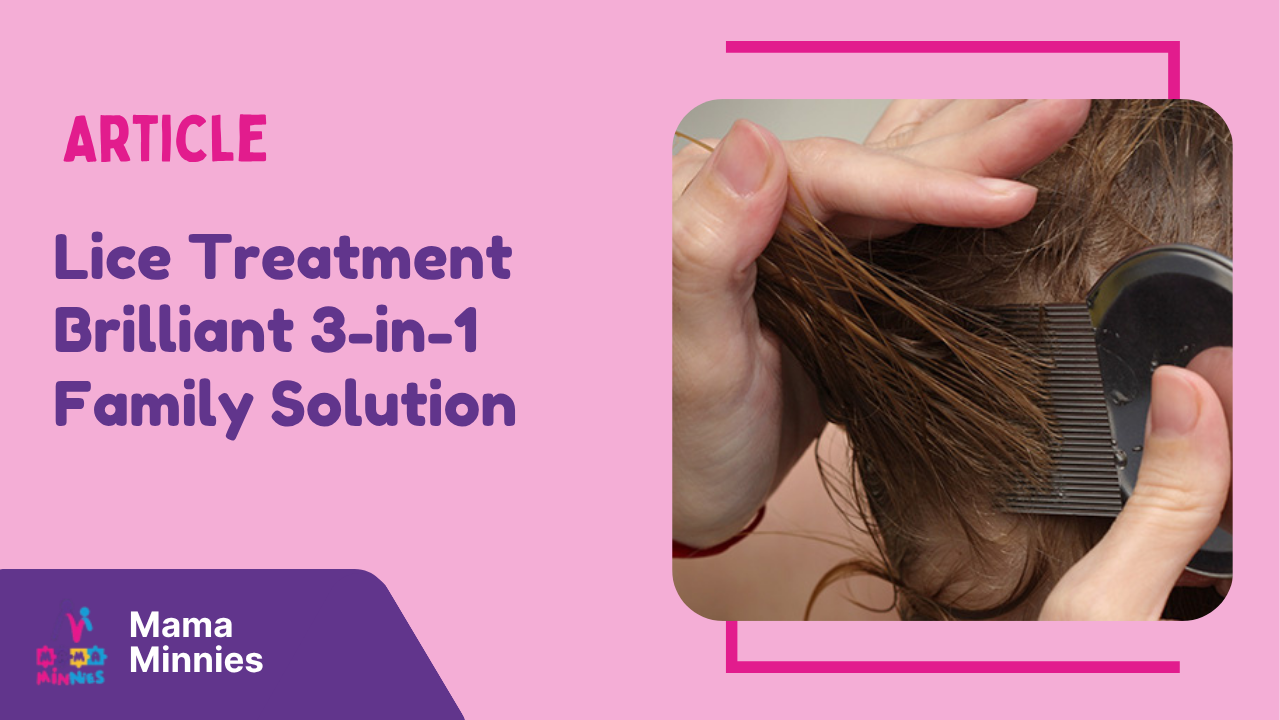
Introduction To Lice Treatment
Lice infestations are a frustrating challenge that many families face. The tricky part is finding a treatment that is safe, effective, and suitable for both grownups and children. In this guide—drawing on 15 years of experience in lice & nit treatment—I’ll walk you through the options that truly work across age groups, discuss considerations, and help you design a plan that’s safe and smart.
Key takeaways:
- A combination approach (mechanical + safe topical) often delivers the best results
- Some treatments—like Mama Minnies’ natural formulations—can work for both adults and kids
- Safety, age limits, and sensitivities must guide your choice
- Repeating treatment and careful follow-up is essential
- If resistance or failure occurs, consult a professional dermatologist or lice specialist
Understanding Treatment Criteria for All Ages
When looking for Head Lice Treatment suitable for both adults and kids, we first need a clear set of criteria. The treatment must balance efficacy, safety, age inclusivity, ease of use, and minimal adverse effects. It should kill live lice, disable newly hatched ones, and be tolerable on sensitive scalps (common in children).
Key attributes for universal lice treatments
A treatment that works universally should have broad safety profiles, mild formulation (e.g. non-toxic, minimal irritants), and proven efficacy across hair types and age groups. It should ideally be usable on toddlers or older children without off-label risk, and also be strong enough to tackle adult lice. Accessibility, cost, ease of application, and minimal required equipment are additional features that make it truly family-friendly.
Why many treatments exclude certain age groups
Many insecticidal shampoos or stronger agents have restrictions some are not approved for use under a certain age (e.g., under 2, or under 6 months), or during pregnancy. Others may be too harsh for tender scalps or cause irritation in children. That often means a treatment good for adults may be unsafe for little ones. So when choosing, always check the age labeling or clinical safety data.
Nonchemical / Mechanical Methods Everyone Can Use
Before turning to insecticides or stronger medicated solutions, nonchemical methods offer a baseline of safety that is often acceptable to both adults and children. These act by physically removing lice or suffocating them without toxic chemicals.
Fine-tooth wet combing & nit removal
This age-old method remains a backbone of lice management. Using a fine‐tooth lice comb on damp, conditioned hair, you slowly comb section by section from scalp to tip, wiping the comb each stroke. Over days, you remove live lice and nits mechanically. Because there is no chemical component, it’s safe for all ages—even infants—so long as you are gentle and patient.
Smothering / suffocation agents (oils, lotions)
Oils like coconut oil, olive oil, or specially formulated lotions work by suffocating lice. You apply them generously, cover with a shower cap, and leave for a duration (often a few hours to overnight) before combing out. For example, Mama Minnies offers an anti-lice shampoo plus supportive lotion/repellent that is marketed for family use and claims safety across age groups. Their product is pesticide-free, which helps it align with both adult and child safety considerations.
Heat / desiccation / hot air devices
Some commercial devices use heated air to dry lice and eggs. Also, certain techniques with blow dryers can kill up to ~96% of lice eggs with correct technique. These methods require controlled application to avoid burning scalp or hair. Because they rely on physics rather than chemicals, they can be used across ages—provided the person applying is cautious.
Over-the-Counter Options for Children & Adults
Sometimes mechanical and nonchemical methods aren’t enough, especially in heavier infestations. That’s when OTC (over-the-counter) formulations come into play. Some are safer than others for mixed-age households.
Permethrin & pyrethrin (OTC insecticides)
Permethrin 1% (often sold as Nix) and pyrethrin products (with piperonyl butoxide) are widely used OTC insecticides. These are generally approved for use in children aged 2 years and older, and suitable for adults. However, rising resistance among lice populations reduces their reliability in some regions. They must be used exactly as per instructions, and retreatment is often needed 7–10 days later.
Dimethicone / silicone-based treatments
Dimethicone is a non-insecticide, silicone oil that works by coating lice and cutting off their internal fluid exchange. Because it’s non-toxic, it tends to have fewer side effects and is safer for children and adults alike. Many clinicians favor it where resistance to pyrethroids is common.
Benzyl alcohol lotions (when allowed)
Some OTC benzyl alcohol formulations are available in certain countries. They kill lice by suffocation rather than classic neurotoxins. Their age use limits differ by country, so always read the label. These can be a middle ground for families wanting a gentle but effective option.
Prescription Treatments That Suit Broad Age Range
If OTC options fail or lice are resistant, prescription treatments may be needed. Some are formulated to be safe for both children and adults, and can offer stronger efficacy.
Ivermectin topical (ages 6 months+)
Ivermectin lotion can sometimes be used down to 6 months of age (per manufacturer guidelines), making it suitable across a wide age span. It works by paralysing lice, which then die. Because it is not a traditional neurotoxin (at least not in the same way as older insecticides), its safety margin is relatively broad.
Spinosad suspension (safe from infancy)
Spinosad is a prescription option with excellent ovicidal (egg-killing) activity, which reduces need for reapplication. Some formulations are approved for use even in young children (depending on the local regulatory authority). It is a strong candidate when you want a prescription treatment that covers both adults and kids.
Malathion, lindane, and other stronger agents
Stronger agents like malathion may be effective in resistant cases, but their use is often restricted in young children or those with specific scalp conditions. Lindane is seldom used today due to neurotoxicity concerns. These should be considered only under medical supervision and when safer options have failed.
Safety, Age & Contraindications
Just because a treatment is effective doesn’t mean it’s safe for every person. You must account for age, comorbid conditions, scalp sensitivity, and potential interactions.
Infants, toddlers, elderly — what to watch
Infants and toddlers often have delicate skin and may be more susceptible to irritation or absorption of chemicals. In older adults or those with thinning skin, even mild insecticides can cause burns or sensitivity. Prefer nonchemical, gentle methods where age is a limitation.
Allergic reactions, scalp sensitivity, skin conditions
Before using any product, perform a patch test (apply a small amount to a hidden skin area). If irritation occurs—redness, burning, swelling—discontinue immediately. People with eczema, psoriasis, or broken skin should choose gentler options or consult a dermatologist first.
Pregnancy, breastfeeding, chronic conditions
Many treatments are not recommended during pregnancy or breastfeeding. In such cases, preference is given to mechanical methods or treatments with established safety. Always consult a doctor before using any insecticidal treatment in these special populations.
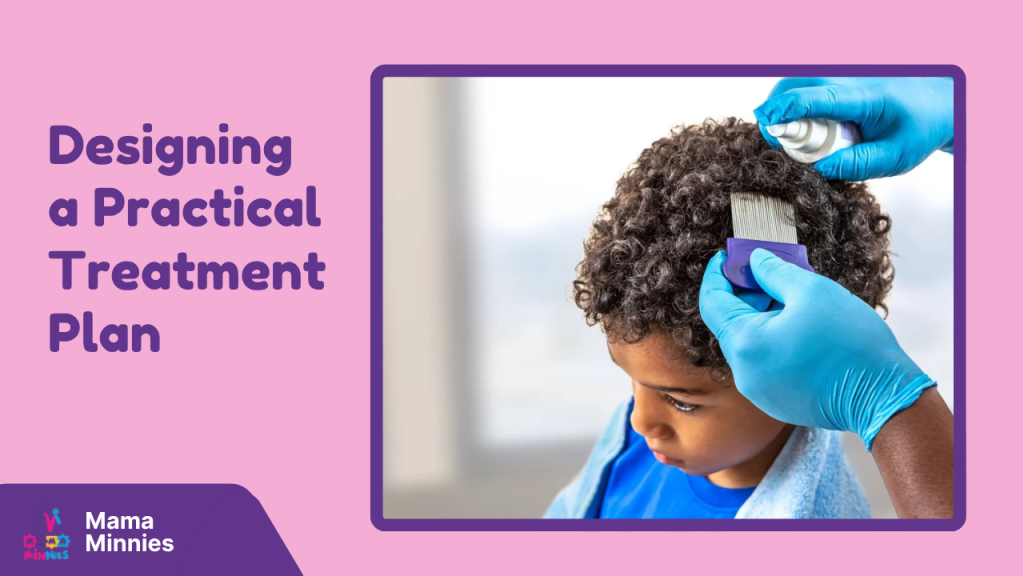
Designing a Practical Treatment Plan
A great treatment is not just the product you use—it’s how you apply, repeat, and monitor. A carefully structured plan increases your odds of success across ages.
Combining nonchemical + drug methods
Start treatment by combing and mechanical removal to lower the infestation. Then apply your chosen product (e.g. dimethicone, or Mama Minnies anti-lice shampoo) to kill lingering lice. Follow with further combing in the days after for maximum effect. This combined approach leverages multiple mechanisms and minimizes failure.
Timing and retreatment schedule
Because lice eggs (nits) hatch in 6–9 days, you need to retreat or reapply a second round around day 7–10. Some treatments are Ovicidal (Kill Lice Eggs), which reduces the need for retreatment—but in practice, many clinicians still advise a second check or application. Set reminders and stick to the schedule.
Checking, follow-up, and compliance tips
Check hair under bright light or with magnification on days 3, 7, and 14. Keep close communication with everyone being treated to ensure compliance. Reward kids for patience, and break treatment sessions into short manageable chunks if needed.
Resistance, Failures & When to Escalate
Even the best plan can fail if lice are resistant or application was flawed. Recognizing when to change course is vital.
Why some lice survive (resistance, misuse)
Lice populations in many areas now show high rates of resistance, particularly to permethrin and pyrethrin. Misuse—like shortening contact time or washing too soon—also undermines effectiveness. Always follow instructions closely.
Recognizing treatment failure early
If live lice are seen 48 hours after treatment, or heavy scratching resumes, you may have failure. Check carefully for live lice (not just nits). Repeat or escalate treatment strategy sooner rather than later.
When to consult a professional / dermatologist
If after two full cycles of retreatment lice persist, or the scalp is severely irritated, infected, or bleeding, it’s time for professional help. A dermatologist may suggest prescription or off-label therapies or even manual removal under supervision.
Real-World Comparisons & Evidence
To make your choice more grounded, it helps to look at clinical evidence and real user experience (especially for mixed-age households).
Clinical success rates by age
Studies show that silicone/dimethicone-based treatments often outperform older insecticides in resistant regions, and they tend to maintain similar efficacy in both children and adults. Some prescription agents like spinosad have been shown to kill both lice and eggs in one application, reducing treatment burden in children and adults alike.
User experience / cost / accessibility
In many local markets, Mama Minnies is Available in Pakistan as a natural, pesticide-free brand. Their anti-lice shampoo, repellent lotion, and leave-in spray are bundled as a family kit, claiming up to 95% reduction in infestations. Users often appreciate that they can use the same products for both kids and parents without worrying about harsh chemicals. However, cost, shipping, and local regulation must always be evaluated.
Other user reviews report that combining such natural formulations with fine combing yields better results than either alone.
Conclusion
When choosing a lice treatment that works for both adults and kids, the best strategy blends safety, effectiveness, and practicality. Mechanical and suffocation methods offer baseline safety, while dimethicone or Mama Minnies-style gentle formulations can push the treatment further without alienating children. Always account for age limits, scalp sensitivity, and the potential for resistance. Most importantly, use a consistent plan with retreatment, combing, and follow-up checks.
If two solid treatment cycles fail or complications arise, get professional input. With a thoughtful approach, you can rid everyone in the family—adult and child alike—of lice.
FAQs
Can I use Mama Minnies for a 3-year-old and a 45-year-old parent?
Yes, the brand markets its anti-lice products (shampoo, lotion, spray) as safe for the entire family, pesticide-free and suitable across ages. Always patch test and consult guidelines for infants.
Do I need to treat everyone in the household, even those without symptoms?
Yes—because lice spread via head-to-head contact. Prophylactic treatment helps prevent reinfestation.
How many times should treatment be repeated?
Typically, a second application or check is done around day 7–10 to catch any newly hatched lice.
Is dimethicone safe for pregnant people?
Dimethicone is considered relatively low risk since it works physically (not chemically). But always check with your healthcare provider before applying any product during pregnancy.
What if my child has sensitive skin or eczema?
Stick with mechanical removal and extremely mild treatments. Avoid harsh insecticides or essential oils without medical advice
Read More:
- What to do if the scalp burns after treatment?
- Can pregnant women use lice shampoos safely?
- Are Mama Minnie’s products dermatologist tested?
- Can anti-lice shampoo cause hair loss?
- Which is better herbal or medicated shampoo?