
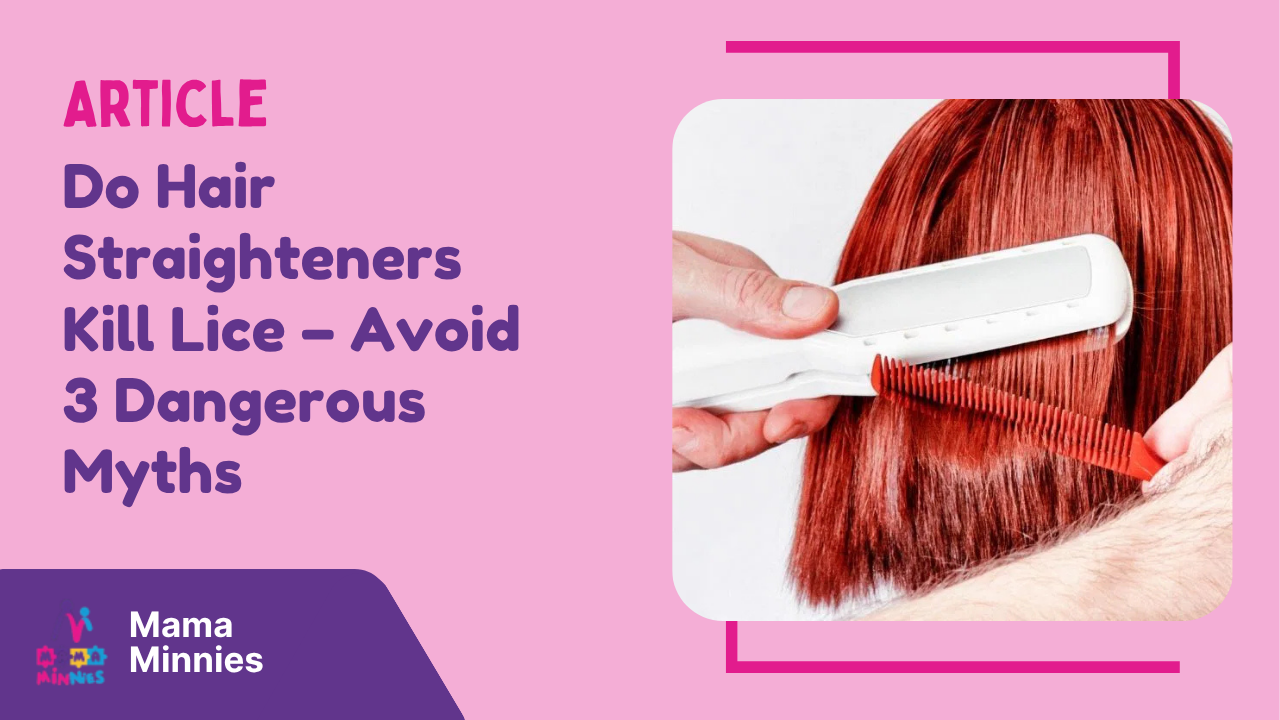
Introduction: Hair Straighteners & Lice
If you’ve ever spotted a suspicious itch and immediately reached for your flat iron, you’re not alone. The internet is full of DIY hacks promising quick fixes for head lice — and hair straighteners often top that list. But do they really kill lice, or is this just another myth that sounds too good to be true?
Before you plug in your straightener, let’s take a closer look at what science (and common sense) say about the question: Do Hair Straighteners Kill Lice. Spoiler alert — there’s a bit more to it than just heat and hair!
Key Takeaways:
• Hair straighteners can kill some lice on contact but aren’t reliable for complete removal.
• Lice eggs (nits) are incredibly resilient and usually survive flat iron heat.
• Safe, targeted treatments like Mama Minnies offer more effective results for both adults and kids.
• Combining heat, combing, and treatment gives better long-term results.
• Always disinfect tools, bedding, and clothing to prevent reinfestation.
Understanding How Heat Affects Lice
When it comes to lice, heat can indeed be powerful — but it’s not foolproof. Straighteners generate high temperatures (usually between 180°C to 230°C), which is well above what lice can survive. However, the key issue isn’t the temperature; it’s access. Lice often cling close to the scalp, in hard-to-reach areas that flat irons simply can’t touch safely.
In theory, you could fry some lice instantly if your iron comes into direct contact with them, but that’s like trying to catch mosquitoes with a matchstick — it’s possible, just not practical or complete.
Lice Hide Where Straighteners Can’t Reach
Lice love warm, humid environments, which is why they live right at the base of the hair shaft near your scalp. Flat irons only press along the mid to lower sections of hair strands, missing the roots entirely — exactly where lice and eggs thrive.
This means even after a thorough straightening session, the majority of lice (and definitely their eggs) remain completely unharmed, waiting to hatch and start the cycle all over again.
Nits: The Real Challenge
If adult lice were bad enough, nits are a whole other level of stubborn. These tiny, glue-like eggs are cemented firmly to your hair shafts and can withstand intense heat. Even if you manage to pass your straightener close to them, the brief contact time is nowhere near enough to destroy them.
That’s why experts recommend pairing any heat-based method with effective anti-lice treatments like Mama Minnies Anti-Lice Lotion and Shampoo to ensure the eggs don’t survive and hatch later.
Why Flat Irons Aren’t a Complete Lice Solution
While straighteners can provide the illusion of quick results, they don’t solve the root problem — pun intended! Lice removal is a two-part process: eliminating living lice and preventing eggs from hatching.
The moment you miss even a few eggs, the infestation can start again in a week or two, leading you right back to square one.
Limited Contact, Limited Results
Lice move quickly and hide deep within your scalp. By the time your straightener reaches them, many have already crawled away or attached themselves closer to the skin. Unless you’re straightening every hair strand from scalp to tip (which is both unsafe and unrealistic), you’ll likely miss most of them.
Plus, using straighteners repeatedly on infested hair can cause damage, dryness, and even burns if you try to reach too close to the scalp.
Lice Eggs Resist Heat Shock
Several studies have shown that nits require prolonged exposure to temperatures above 130°F (around 55°C) for 5–10 minutes to die — far longer than the split-second contact a straightener provides. This means even if you zap a few eggs, most will survive and hatch within days.
That’s why pairing a heat-based method with a proper lice shampoo or lotion from Mama Minnies is essential for effective results. You can learn more about preventing reinfestation in How to Clean Your Home After Lice Infestation.
Safer and More Reliable Lice Treatments
If you’re looking for something that actually works, the good news is — you don’t need to risk your scalp or your straightener! Safe, natural, and family-friendly options like Mama Minnies Anti-Lice products can effectively eliminate both lice and eggs when used properly.
These formulas are free from harsh chemicals, making them ideal for both adults and kids. Plus, they can be paired with gentle combing techniques to ensure every last nit is gone.
Mama Minnies Anti-Lice Lotion and Shampoo
Mama Minnies’ specially formulated Anti-Lice Lotion targets lice directly at the root, suffocating and removing them without toxic ingredients. Following it with the Anti-Lice Shampoo ensures your scalp stays clean, soothed, and free of lingering eggs or debris.
This dual approach is far safer (and far more effective) than relying on heat alone. You can read more about this effective routine in Which Lice Treatment Works for Both Adults and Kids.
Combining Treatment With Combing
No lice-removal routine is complete without a good nit comb! After applying your lotion or shampoo, use a fine-toothed lice comb to meticulously go through small sections of hair. This helps physically remove lice, eggs, and residue from the scalp.
If you’re unsure how to do this correctly, check out How to Check for Lice Properly — it walks you through every step, from parting the hair to identifying live lice versus old nits.
Heat Treatments vs. Chemical Treatments
There’s often confusion about “heat-based” lice treatments, but it’s important to separate professional heat devices from your home straightener. Medical-grade lice treatment systems use controlled airflow and consistent temperature to dehydrate both lice and eggs safely — something flat irons can’t do effectively.
Chemical and natural treatments, when used correctly, are far more reliable and much less damaging to your hair.
Comparing Professional Heat Devices to Flat Irons
Professional lice heat treatments are clinically tested and deliver warm air (not scalding heat) across the scalp for an extended period, ensuring even coverage. Straighteners, on the other hand, offer uneven, brief bursts of extreme heat — great for styling, not for lice control.
These salon-based devices are often combined with combing and follow-up products to prevent reinfestation, similar to how Mama Minnies promotes multi-step lice defense routines.
Are Chemical Shampoos Still Effective?
Many over-the-counter lice shampoos contain permethrin or pyrethrin, but lice have increasingly become resistant to these ingredients — often called “super lice.” You can read about this in detail in Can Head Lice Return After Treatment?.
That’s why natural, non-toxic solutions are gaining popularity — they’re safer, effective, and don’t contribute to resistance over time.
Preventing Future Lice Infestations
Even after successful treatment, lice can come back easily through close contact, shared items, or missed eggs. That’s why ongoing prevention is just as important as the treatment itself.
Maintaining a clean environment, checking hair regularly, and using preventive sprays are key to staying lice-free.
Disinfect Brushes, Hats, and Bedding
Lice can survive for short periods on surfaces like brushes, hats, and pillowcases. Wash fabrics in hot water and disinfect personal items weekly, especially during outbreaks. You can learn more about this in Can Lice Live on Bedding or Clothes?.
Using a lice-repellent spray from Mama Minnies after cleaning can add a protective layer against future infestations.
Regular Scalp Checks
Set a family routine to check everyone’s scalp once a week. Early detection makes treatment easier and prevents spreading. How to Prevent Lice from Spreading in the Family offers more helpful tips on managing lice outbreaks as a household.
When to Seek Professional Help
If lice keep coming back even after multiple treatments, it might be time to seek professional help. Recurrent infestations often mean some eggs are surviving or there’s an untreated contact nearby.
A lice-removal specialist or dermatologist can guide you through stronger options or spot errors in your current routine.
Persistent Infestations and Resistant Lice
Sometimes, what looks like new lice is actually a case of “super lice” — resistant to common treatments. In such cases, using products like Mama Minnies’ Anti-Lice Lotion with consistent combing can help. You can also explore Are Natural Lice Remedies Effective for Adults to understand more about effective non-chemical solutions.
Conclusion – Can Hair Straighteners Really Kill Lice?
In short — yes, straighteners can kill some lice on contact, but they’re nowhere near a reliable or safe treatment option. The heat can’t reach all areas of the scalp, and nits are far too resilient to be affected by a few seconds of high temperature.
For real, long-lasting results, pair gentle natural treatments like Mama Minnies with thorough combing, regular scalp checks, and proper household cleaning. Consistency is the real key to staying lice-free!
FAQs – Quick Answers About Lice and Heat
1. Can blow-drying hair kill lice?
A hot blow-dryer may kill a few lice but won’t eliminate nits. Use it only after a proper lice treatment to dry your hair, not as a standalone remedy.
2. How hot does it have to be to kill lice?
Lice die at sustained temperatures above 130°F (55°C), but achieving that safely on the scalp is nearly impossible without professional equipment.
3. Do straighteners kill lice eggs?
No lice eggs are protected by tough shells and remain unaffected by brief heat exposure.
4. Is it safe to straighten hair during lice treatment?
It’s better to avoid heat until the scalp heals completely after treatment. Use natural products like Mama Minnies instead for a gentler approach.
5. What’s the fastest way to get rid of lice?
Combining Mama Minnies Anti-Lice Lotion, shampoo, and consistent combing gives the quickest, safest, and most reliable results.
Read more:
- What to do if the scalp burns after treatment?
- Can pregnant women use lice shampoos safely?
- Are Mama Minnie’s products dermatologist tested?
- Can anti-lice shampoo cause hair loss?
- Which is better herbal or medicated shampoo?